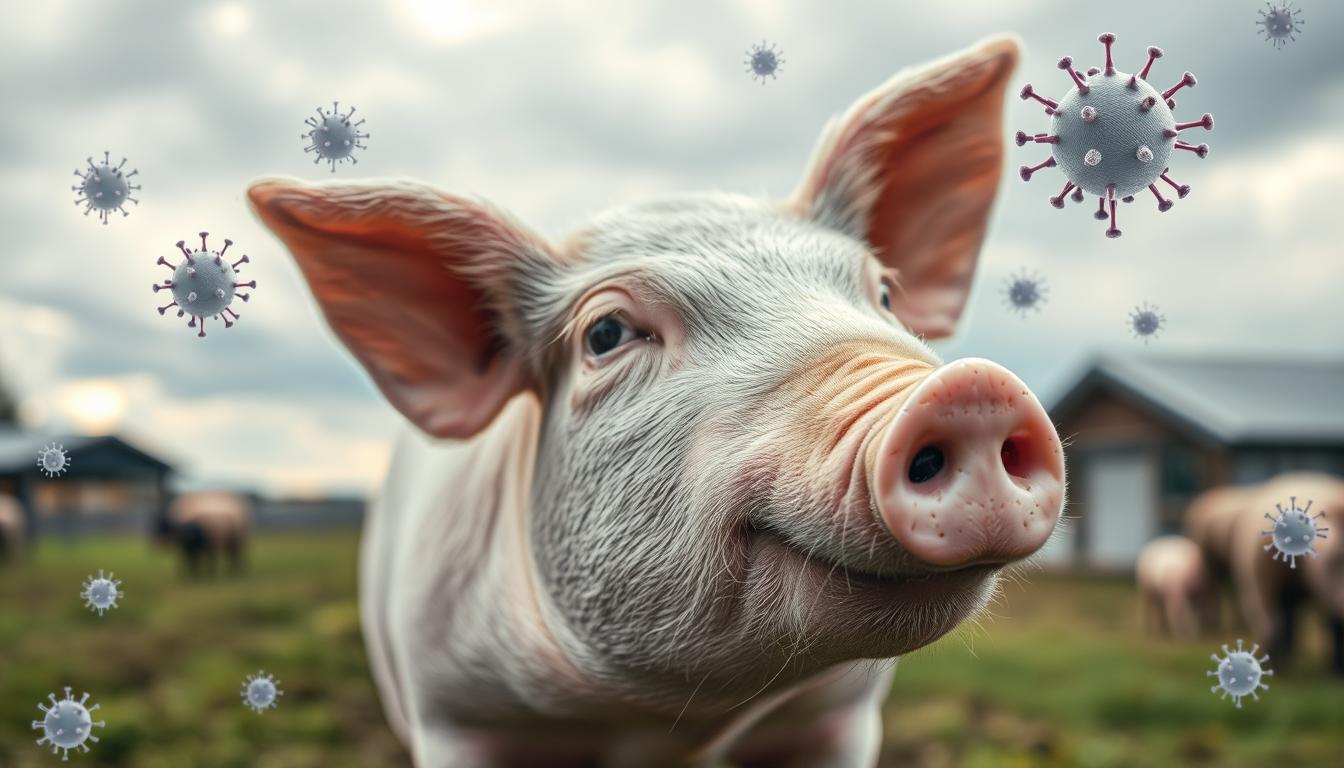
A pig on a small farm in Oregon has tested positive for H5N1 bird flu. This is the first time this virus has been found in pigs in the U.S. The U.S. Department of Agriculture confirmed this. This is scary because pigs can mix bird and human flu viruses.
This mixing could create new, very contagious viruses. Virologists are worried. They know that pigs can spread viruses to other pigs and maybe to people too.
Since 2022, over 100 million poultry birds have been killed in the U.S. because of bird flu. This is the worst outbreak ever. Finding bird flu in pigs makes things even scarier.
36 people have tested positive for bird flu this year. Most of these cases are in farm workers in places like California and Colorado. So far, no one has passed the virus to another person. But, the virus could change and become more dangerous.
H5N1 has killed about 50% of people who got it. This makes it very important to watch and control the virus.
Key Takeaways
- First U.S. detection of bird flu in a pig reported on a small farm in Oregon.
- Pigs can act as “mixing vessels” for bird and human flu viruses, increasing zoonotic diseases risk.
- Over 100 million poultry birds culled in the U.S. since 2022 due to the bird flu outbreak.
- 36 human cases of bird flu reported this year, mostly among farm workers.
- USDA considers the risk to the nation’s pork supply from the Oregon case to be low, but concerns remain high.
Understanding Bird Flu and Its Origins
Bird flu, also known as avian influenza, is a big problem for birds and humans. It’s important to know what it is and where it comes from.
What is Avian Influenza?
Avian influenza is a disease caused by viruses from birds. These viruses are found in wild birds and can also affect domestic birds and other animals. The influenza A virus changes quickly, which can help it spread to humans.
History of Avian Influenza Outbreaks
Bird flu has caused big problems for birds and people over the years. The USDA says bird flu has hit almost 450 dairy farms in 15 states since March. The CDC found 46 human cases since April, showing the virus is still a threat.
Tests showed 7% of dairy farm workers had bird flu. But only half of them remembered feeling sick. The first case of bird flu in pigs was found in Oregon on October 29.
| Outbreak Statistics | Details |
|---|---|
| Infected Dairy Farms | 450 |
| Human Cases Since April | 46 |
| Dairy Workers Testing Positive | 7% |
| Antibodies Detection in Workers | 8 out of 115 |
| States Reporting Outbreaks in Poultry | 48 |
| Pigs Detected with Bird Flu | First time in October |
| Increased Protective Equipment Use | 28% |
| Increased Eye Protection Use | 40% |
Bird Flu Detected in Pigs – Here’s Why Virologists Are Concerned
Recently, bird flu was found in pigs. This has made virologists and health experts very worried. They are worried because the virus could spread from animals to people, causing new health problems.
The United States Department of Agriculture (USDA) found bird flu in a pig on an Oregon farm on October 30. A second pig tested positive just a week later. This is the first time bird flu was found in pigs in the U.S.
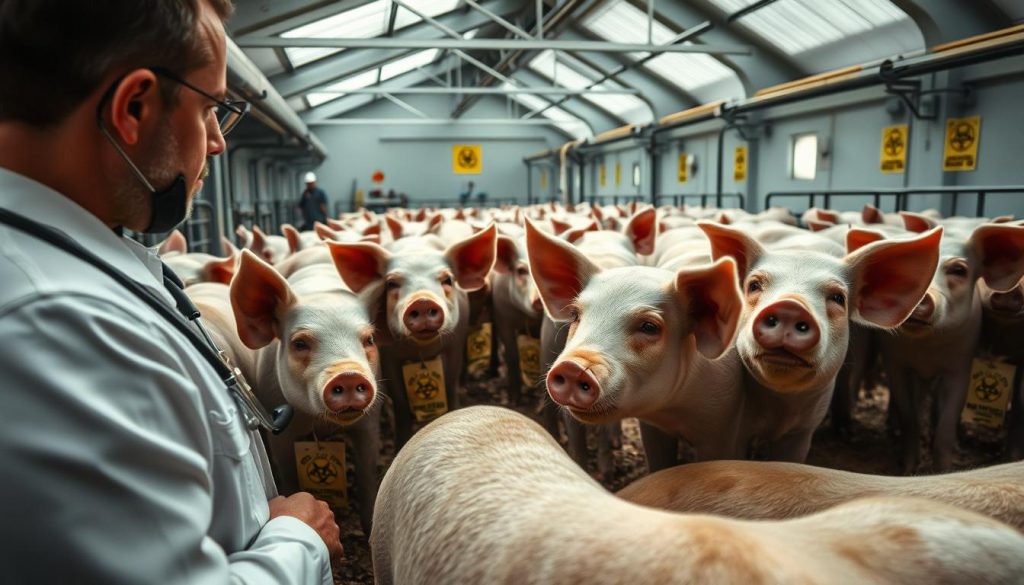
The Centers for Disease Control and Prevention (CDC) found 46 human cases of bird flu since April. About 7% of dairy workers in Michigan and Colorado have antibodies to the virus. This shows the virus can spread from animals to people, and we need to be careful.
Dairy workers weren’t using respirators that could protect them from inhaled bird flu particles, leading to previous human infections.
Many dairy workers are still at risk. They are especially at risk when cleaning the milking parlor. The CDC says eye protection usage went up by 40% after a worker got infected through milk splashing into their eyes.
The USDA is now testing bulk milk samples for bird flu. This is to stop the virus from spreading in animals and to people. With outbreaks in 48 states and cases among dairy farm workers, we must stay alert and take extra precautions.
Viral Mutations and the Risk of Pig-Human Transmission
The discovery of avian influenza, like H5N1, in pigs is very worrying. Pigs can mix avian and human flu viruses. This could lead to new, dangerous strains.
How Viral Mutations Occur
Viral mutations happen through genetic shift and drift. Genetic drift is small changes in the virus’s genome. Genetic shift is when two viruses mix in one host, creating new strains.
This mixing can make viruses that spread easily among humans. For example, mixing human H1N1 and avian H5N1 in pigs could create a big problem.
Implications for Pig-Human Transmission
These changes are very serious. We need to watch closely and study them a lot. The first H5N1 case in a U.S. pig was in Oregon.
Swine tissues can host both types of receptors. This means viruses can mix and change. This could lead to new, dangerous viruses, like the 2009 H1N1 pandemic.
There’s been an outbreak of H5N1 in dairy cattle in 14 states. It has affected 404 herds and 20 people who worked with the cattle. Most of these cases were in California.
Also, 18 poultry workers got sick, mostly in Colorado. The CDC has tested 300 people and watched over 6,100 for H5N1. This shows how serious it is.
A study found a virus from a dairy farm worker to be very dangerous. It was lethal in mice and ferrets. This shows it could harm humans a lot.
Swine influenza viruses (IAVs) can also change a lot. In the late 1990s, the U.S. saw outbreaks of respiratory diseases in swine. These were caused by H3N2 IAVs in many states.
Tests showed many swine were exposed to different viruses. 28.3% were exposed to cH1N1 and 20.5% to H3N2 viruses.
| Strain | Host | Location | Cases |
|---|---|---|---|
| H5N1 | Pig | Crook County, Oregon | 1 |
| H5N1 | Dairy Cattle | 14 States | 404 Herds |
| H5N1 | Human | Cattle Handlers (CA) | 20 |
| H5N1 | Human | Poultry Workers (CO) | 18 |
| H3N2 | Swine | Multiple States | Multiple Herds |
We need to watch closely and keep studying to fight pig-human flu risks. This is key to stop future pandemics.
The Role of Biosecurity Measures in Controlling Bird Flu
Strong biosecurity steps are key to stop bird flu in farms. They keep the virus from spreading. This helps keep animals and people safe.
Recommended Biosecurity Protocols
Farms need to follow strict rules to fight bird flu. They should control who comes in and keep everything clean. They also need to watch animals closely and teach workers how to stay safe.
Challenges in Implementing Biosecurity in Farms
Farms face big problems in keeping up with biosecurity. It takes a lot of work and money. Small farms often can’t afford it.
It’s important for the government and farms to work together. This helps keep bird flu under control. Everyone needs to help to make sure it works.